A Sensory-Friendly Thanksgiving: A Calm Family Meal for Your Autistic Child

As a Board Certified Behavior Analyst (BCBA) and R.B.A. (Ont.) who has also raised an autistic young adult in the Western GTA, Thanksgiving is one of the days I start planning early, because it packs the year's longest single sitting of sensory load into one meal. Unlike Halloween, which is a short burst you can walk away from, Thanksgiving asks your child to sit at a crowded table for a long meal, eat food that may be new, and hold up their end of a room full of talking relatives, all in a house that may not be their own. You do not have to do a "normal" Thanksgiving. You just have to do one that fits your child.
Quick Summary:
- The goal is a Thanksgiving that fits your child's comfort level, not a "normal" one.
- Plan the meal around them: a visual plan of the day, a seat that works, familiar food on the plate, and a quiet room two steps away.
- Build in a way out. A pre-agreed signal for "I need a break" and a plan to leave early keep a good day from turning into a bad one.
- It is always okay to do a smaller Thanksgiving at home. The meal matters less than the calm.
1. Why Thanksgiving Is the Long Sensory Stretch
Autistic children often process the world differently, and many experience sensory overload, when too much input at once is hard to manage. ASAT points to the usual holiday stressors for autistic children: a break from routine, a large gathering, and unfamiliar food, all at once. Thanksgiving is all three, stretched across a long single sitting. The table is full, the courses keep coming, the room is loud with overlapping voices, and the meal can run for a good while. A child who handles a busy school day with no trouble can still find one long family meal overwhelming. That is not a behaviour problem. It is a real sensory load, which is exactly why you plan for it. If you are new to this, our guide to sensory processing differences is the place to start.
2. Plan the Meal Around Your Child
Most of what makes the day go well happens in the days before. Start with a visual plan of the day, a strip of pictures that walks through the morning, the travel, sitting down, the food, and coming home, so your child knows what is coming and, just as importantly, when it ends. The Autism Society recommends this kind of planning ahead, and a simple social story (a short visual walk-through of what will happen), getting there, sitting, eating, leaving, turns the unknown into the known.
Then plan the seat and the plate. A seat away from the noisiest part of the room, and a plate that starts with food your child already eats, with the new items sitting beside it, not replacing it. You are not asking them to eat the whole spread; you are asking them to have a place at the table that is safe to sit in. Our guide to picky eating and food aversions has the detail on how to introduce new foods without turning the plate into a fight.
Set up a quiet room two steps away. A spare bedroom, a hallway with the door open, somewhere they can go and come back from without making a scene. Tell everyone in the room, before the day starts, that this room is a "go to" spot, not a punishment. In my own house, a pre-agreed hand signal carried the whole day: one tap on the table meant "I need a break," and it let my child step away before the load hit the point where they could not come back on their own.
3. The Long Sit: Keeping the Table Manageable
The meal is the hard part, not the cooking. Build in movement. A child who has to stay in one chair for the whole meal is more likely to hit a wall than one who can stand, stretch, or help clear a plate. Let them be useful: pass the rolls, set a place, bring a dish to the table. Purposeful movement beats "sit and behave."
Keep expectations small. They do not have to eat the turkey. They do not have to make small talk with a relative they see once a year. They do not have to stay for the whole dessert. Decide in advance what "good" looks like for this year, and let go of the rest. If the room gets too loud, you can move the meal to a quieter room, put on a calm song, or let them have their headphones for part of it.
Watch the signals. Picking at food, going quiet, rocking, covering their ears, these are all signs that it is too much. The Autism Society suggests building in quiet, low-stim moments to de-stress, and that is the move: get them to the quiet room for a few minutes before the load peaks, not after it has.
4. Getting There: Travel and the Unfamiliar House
If you are driving to a relative's house, the car ride is its own small challenge. A familiar seat, a fidget or a special item, and a short list of what the drive will involve, where you are going, roughly how long it is, what will be there, takes a lot of the edge off. If the ride is long, plan a stop so it is not one long stretch.
The house itself is new. If you can, go once before the day, just to stand in the kitchen and find the bathroom. A social story that names the room, the table, and the quiet space helps a lot. And if your child is non-speaking, a card or an AAC display (a device-based way to communicate) that says "I need help" or "I need a break" does the work that words would.
5. When the Day Tips
Sometimes the plan is the best you can do and it is still too much. That is allowed, and leaving early is a win, not a failure. The single most useful thing you can do is decide the exit in advance: what "too much" looks like, and who will quietly walk to the car with you. A parent who has already decided to leave is calmer than one who is deciding in the moment, and the child picks that up.
If the whole gathering is too much, do a smaller Thanksgiving at home. The same food, the same people you love, a table that is not crowded. The meal matters less than the calm, and a quiet home dinner with the family beats a strained hour at a big house every time. If the day does tip toward a meltdown, the goal is to get out of the load, not to push through. Our guide to meltdowns versus tantrums is the one to keep handy for that.
And this is not a one-year problem you are solving. As your child gets older and more independent, the same tools, the visual plan, the quiet room, the exit plan, keep working, and you tune them year to year. A long, late family meal also lands right before bedtime, so if you want to protect the night, our guide to sleep and evening routines is the one to plan with.
6. When Professional Support Helps
Some families handle all of this on their own, and that works. But if your child's sensory load is part of a bigger pattern, overwhelm at school, at the store, at family gatherings, a therapist can make the day much smoother. An R.B.A. (Ont.) can help build the visual plan and the social story, set up the break signal, and coach the family on what to do when the load peaks. An occupational therapist can look at the sensory side: the seat, the noise, the food textures, and what specific supports will fit. And if the whole thing is a lot, a good therapist will help you make the call to do something smaller, without guilt.
These are practical, at-home strategies, not treatment, and they work anywhere in Ontario, Canada, where a family gathers for the meal. For families in the Western GTA, Xable's team handles exactly this kind of transition planning year round, and Thanksgiving is no exception.
Start Planning Your Thanksgiving Now
You do not need a perfect Thanksgiving. You need a plan that respects how your child experiences the day, and you can build that in an afternoon. This week, write down the one or two things your child finds hardest about a big meal, set up the quiet room, and decide in advance what "too much" looks like and what you will do when you see it. If you would like a hand with the visual plan, the social story, or the sensory plan, we are here.
Contact Xable
- Phone: (289) 430-5730
- Email: info@xable.ca
- Website: xable.ca

Afsheen Sheikh
Managing Director & Behaviour Consultant | M.Sc., M.B.A., B.C.B.A., R.B.A. (Ont.)
Afsheen’s journey into special needs therapy began over 20 years ago following her son's autism diagnosis. Combining personal parent perspective with extensive clinical practice, she provides evidence-based, compassionate, and neurodiversity-affirming care for families across the Halton and Peel regions.
Navigating the Ontario Autism Program?
Get personalized support for OAP funding allocations, ABA/IBI therapy, and life skills programs across the Halton and Peel regions — with coordinated care alongside speech-language pathologists and occupational therapists where needed.
Related Articles

A Sensory-Friendly Halloween: Costumes, Candy and Trick-or-Treating Without a Meltdown
Halloween stacks lights, noise, crowds and costumes at once. Here's how to plan a night that fits your autistic child, from trial runs to the blue-bucket signal.
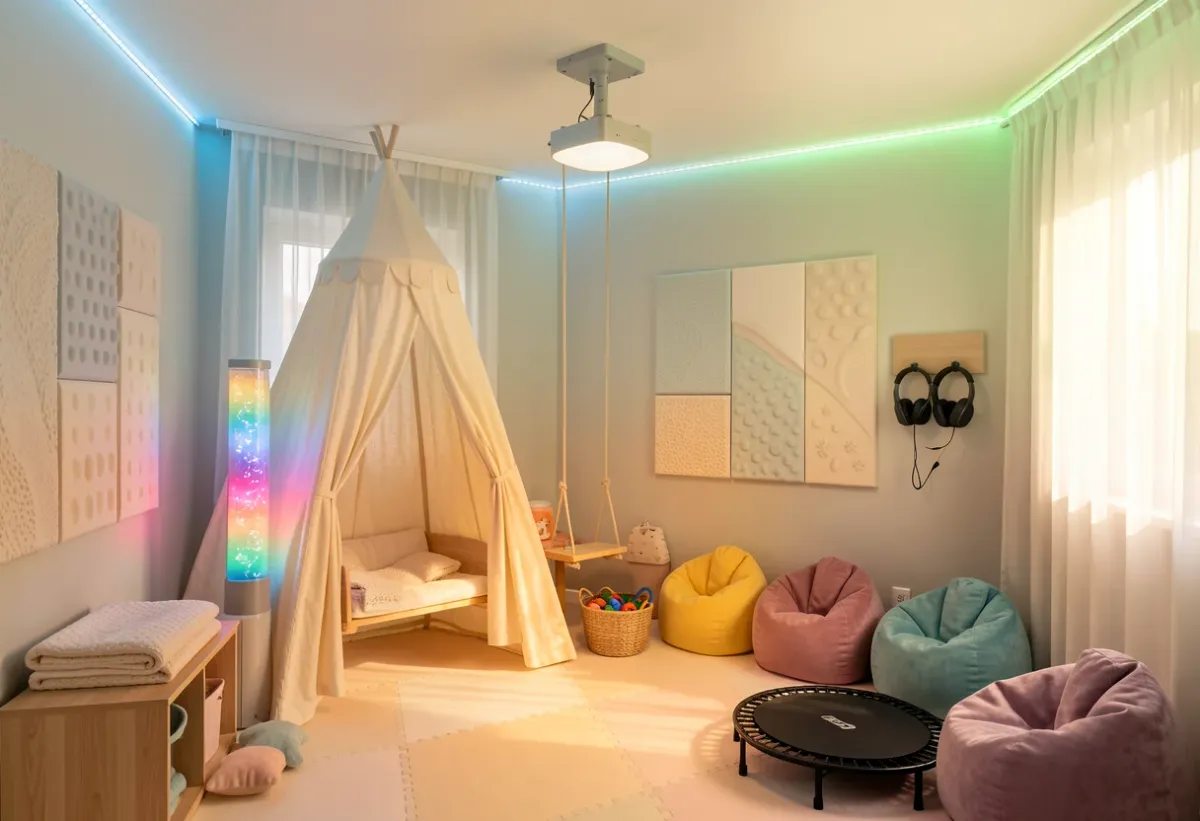
Sensory Processing & Overload: A Parent's Complete Guide to Home & Community Strategies
Understand sensory seeking vs avoiding, spot sensory overload triggers, and build a sensory-friendly environment at home and in public.
Sleep Solutions for Autistic Children: Evening Routines That Actually Work
Up to 80% of autistic children struggle with sleep. Learn why, plus evidence-based evening routines and sensory strategies from a BCBA and parent.