Picky Eating and Food Aversions in Autism: Sensory-Friendly Tips Every Parent Needs

If your child eats fewer than ten foods, turns their plate away when new items are placed in front of them, or has a meltdown at the sight of a food with an unfamiliar texture — you are not alone. Picky eating and food aversions affect up to ninety percent of autistic children, far more than the fifteen to twenty percent seen in neurotypical peers.
As a Board Certified Behavior Analyst (BCBA) and parent of an autistic young adult who once survived on chicken nuggets, white rice, and plain pasta for months at a time, I know how exhausting mealtime can become. The good news is that feeding challenges are highly treatable when you understand the sensory roots behind them.
Quick Summary:
- Autistic picky eating is driven by sensory processing differences in taste, texture, smell, and temperature — not stubbornness or defiance.
- Food chaining gradually expands food variety by making tiny changes to accepted foods.
- Occupational therapists use the Sequential Oral Sensory (SOS) approach to desensitize oral-motor aversions step by step.
- Mealtime meltdowns are a form of sensory overload; read our guide on Autism Meltdowns vs. Tantrums to understand the difference.
1. Why Autistic Children Are More Likely to Be Picky Eaters
Picky eating in neurotypical children is usually a phase — most kids outgrow it between ages three and five. For autistic children, food aversions often persist because they are rooted in sensory processing differences, not behavioural preference.
The brain of an autistic child may process taste, texture, smell, temperature, and even the visual appearance of food differently than a neurotypical brain. A tomato might feel "squishy" in an unpleasant way. A mixed casserole might be overwhelming because five different textures hit the mouth simultaneously. This is not pickiness in the conventional sense — it is a genuine neurological response to sensory input that feels uncomfortable or even painful.
Some children have fewer than ten accepted foods and may gag, vomit, cry, or have a full meltdown when presented with anything outside their narrow list — these severe aversions are typically tied to specific sensory triggers (texture is the most common culprit) and benefit from structured feeding therapy involving ABA, occupational therapy, or both. Children who are non-verbal may struggle to express food preferences or aversions, making AAC, PECS, and non-verbal communication strategies a valuable complement to feeding therapy. Others avoid certain foods because they genuinely struggle with the motor skills required to chew, swallow, or manipulate food in their mouth; an occupational therapist or speech-language pathologist can assess these underlying deficits.
Understanding this distinction is the first step toward helping your child expand their diet without forcing anything that triggers distress. For a deeper understanding of how sensory processing works across all eight systems, read our complete guide on sensory processing and overload guide.
2. Creating a Sensory-Friendly Mealtime Environment at Home
The environment around mealtime matters just as much as the food itself. A chaotic, pressured dining experience can reinforce aversions and make progress impossible. Use plain-coloured plates (busy patterns can be distracting), avoid mixing multiple textures on one plate — serve foods separately — and keep background noise low by turning off the TV or lowering music volume. Allow your child to wear noise-canceling headphones if kitchen sounds are overwhelming.
Autistic children thrive on predictability. Serve meals at consistent times, use the same seating arrangement, and follow the same sequence (wash hands → sit down → eat → clean up). Consistency reduces anxiety and makes your child more open to small changes over time.
Forcing a child to eat something they find aversive can create long-term negative associations with that food — and sometimes with mealtime itself. Research consistently shows that pressure feeding increases avoidance behaviours. Instead, use positive reinforcement: praise any interaction with the target food (looking at it, touching it, licking it) without requiring a bite.
3. When to Seek Professional Feeding Therapy in Western GTA
If your child eats fewer than ten foods, has lost weight, shows signs of nutritional deficiency, or mealtime consistently triggers meltdowns that disrupt the entire family — it is time to seek professional support. In Ontario's Western GTA, feeding therapy is typically delivered through one or both of these pathways: ABA Feeding Therapy (a BCBA-designed plan using food chaining and reinforcement strategies, often covered under Ontario Autism Program (OAP) Core Clinical Services for registered families) and Occupational Therapy Feeding (an OT-trained therapist using the SOS approach and sensory integration techniques to address underlying processing challenges). Some children benefit from a combined approach — an ABA therapist reinforcing food acceptance behaviours while an OT addresses sensory and oral-motor foundations. This multidisciplinary model is exactly what Xable offers.
How Xable Supports Families with Feeding Challenges in Western GTA
At Xable, our team includes Registered Behaviour Analysts (R.B.A. Ont.) who specialize in feeding intervention alongside Occupational Therapists trained in the SOS approach. We work with families across Oakville, Mississauga, Brampton, Milton, Burlington, and Etobicoke to create individualized feeding plans that respect your child's sensory profile while gently expanding their diet — without pressure, without force, and without compromising your child's wellbeing.
Start Expanding Your Child's Diet Today
Every child can learn to accept more foods — it just takes the right approach, patience, and professional guidance. The first step is understanding what drives your child's aversions and building a plan that meets them where they are.
If you'd like help working out what's driving your child's food aversions, the Xable team is available to talk it through.
Contact Xable
- Phone: (289) 430-5730
- Email: info@xable.ca
- Website: xable.ca

Afsheen Sheikh
Managing Director & Behaviour Consultant | M.Sc., M.B.A., B.C.B.A., R.B.A. (Ont.)
Afsheen’s journey into special needs therapy began over 20 years ago following her son's autism diagnosis. Combining personal parent perspective with extensive clinical practice, she provides evidence-based, compassionate, and neurodiversity-affirming care for families across Mississauga, Oakville, Brampton, Milton, Burlington, and Etobicoke.
Navigating the Ontario Autism Program?
Get personalized support for OAP funding allocations, ABA/IBI therapy, speech-language therapy, and life skills programs across Mississauga, Oakville, Brampton, Milton, Burlington, and Etobicoke.
Related Articles

Sleep Solutions for Autistic Children: Evening Routines That Actually Work
Up to 80% of autistic children struggle with sleep. Learn why, plus evidence-based evening routines and sensory strategies from a BCBA and parent.

Building Independence: Why Life Skills Training Is Essential for Autistic Children & Youth
Life skills are the foundation of lifelong independence. Discover practical strategies to teach daily routines, self-care, and community safety.
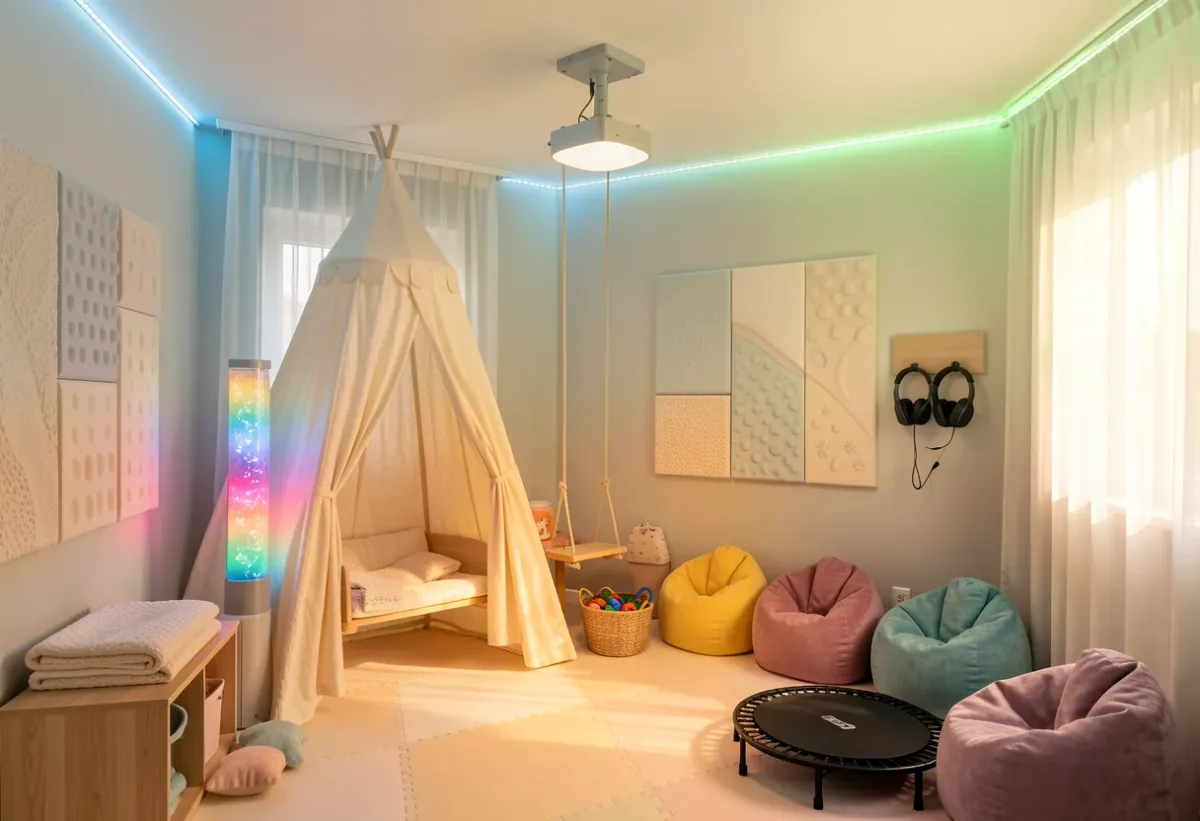
Sensory Processing & Overload: A Parent's Complete Guide to Home & Community Strategies
Understand sensory seeking vs avoiding, spot sensory overload triggers, and build a sensory-friendly environment at home and in public.