Building Authentic Social Skills: Helping Your Child Make Friends Without Masking
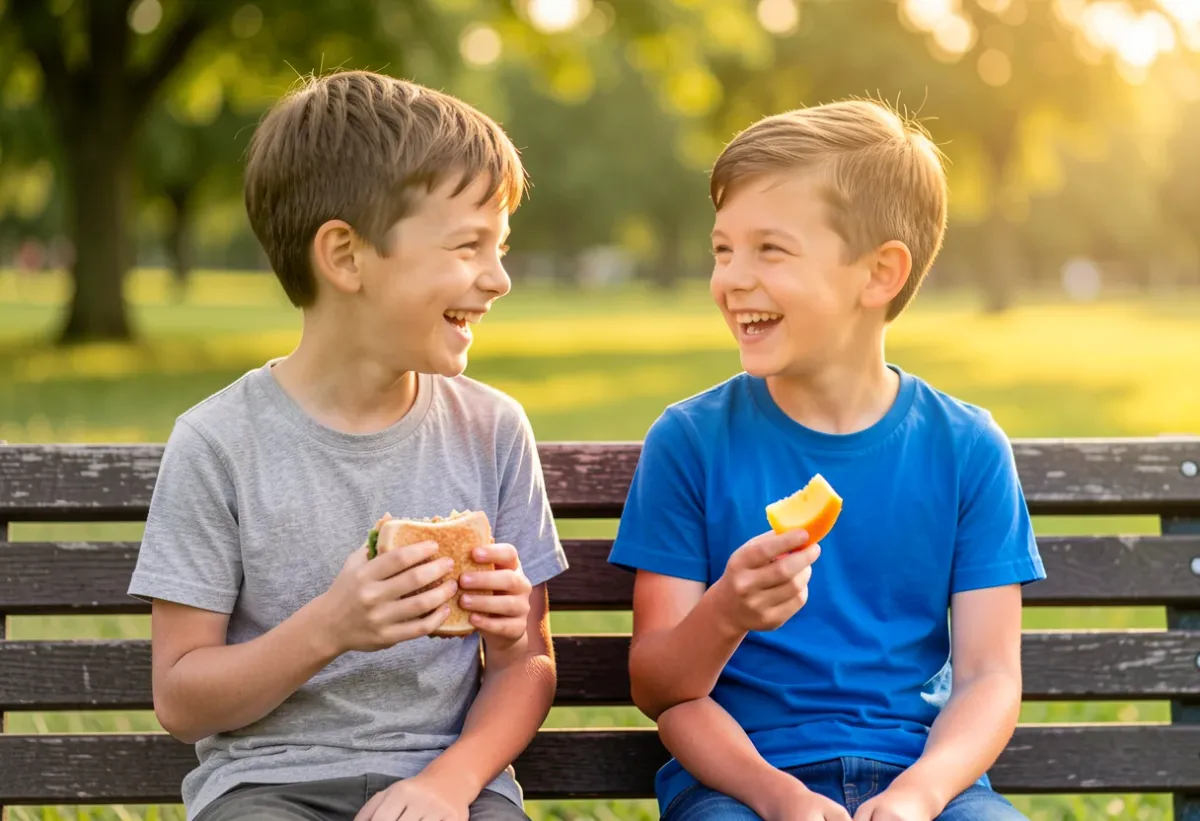
Every parent wants their child to experience meaningful friendships, feeling accepted, included, and understood by peers. However, traditional social skills training often focused on teaching autistic children to mimic neurotypical behaviours — forcing eye contact, hiding special interests, and suppressing natural stimming.
We now know that forced social masking leads to anxiety, social exhaustion, and low self-esteem.
As a Board Certified Behavior Analyst (BCBA), Registered Behaviour Analyst (R.B.A. Ont.), and parent of an autistic young adult, I believe true social development is about authentic connection, self-advocacy, and mutual respect.
Quick Summary:
- Social skills should focus on functional communication and mutual understanding, not suppressing autistic traits.
- Interest-based social connection (Lego, video games, anime, nature) creates natural, low-pressure friendships.
- Structured Social Skills Groups provide a safe, supported space to practice turn-taking and shared play.
- Social skills groups are covered under OAP Core Clinical Services.
1. What Is Neurodiversity-Affirming Social Skills Training?
Traditional social goals often tried to make an autistic child look "less autistic." Neurodiversity-affirming social skills training flips this script by focusing on skills that actually benefit the child:
| Outdated Social Goal | Neurodiversity-Affirming Goal at Xable |
|---|---|
| "Student will maintain 5 seconds of eye contact during conversation." | "Student will use preferred communication (words, AAC, gestures) to initiate play." — our AAC & PECS guide explains how. |
| "Student will stop talking about their favorite topic after 2 minutes." | "Student will practice asking a peer a question about their interests during shared play." |
| "Student will sit quietly without moving or fidgeting during circle time." | "Student will use a quiet fidget tool or sensory seat while listening." |
2. Why Interest-Based Friendships Matter Most
Autistic individuals often form deep, meaningful connections through shared Monotropism — intense interest in specific topics (such as trains, Minecraft, coding, space, or art).
Instead of forcing general playground socialization:
- Identify Your Child's Core Passion: Whether it is building Lego sets or collecting dinosaur trivia.
- Seek Interest-Based Peer Outlets: Enroll in local robotics clubs, Lego building workshops, or specialized gaming groups across Mississauga, Oakville, and Brampton.
- Organize Structured Playdates: Keep home playdates short (60 to 90 minutes) with a defined activity schedule (e.g., baking personal pizzas or building a marble run) to reduce unstructured social anxiety.
3. Core Social Competencies to Practice at Home
You can support your child's social confidence using simple, positive home routines:
- Perspective-Taking & Empathy: Use storybooks or video clips to discuss how different characters might be feeling and why.
- Turn-Taking Games: Play cooperative board games (like Peaceable Kingdom games) where players work together against the game rather than against each other.
- Self-Advocacy Language: Teach your child clear phrases to set social boundaries:
- "I need a quiet break right now."
- "I don't like tag, but I will build blocks with you."
- Read our guide to sensory processing and quiet corners.
4. How Xable's Social Skills Groups Work
At Xable, our structured Social Skills & Group Sessions bring together children of similar ages and developmental profiles in small, therapist-facilitated groups across the Western GTA.
Our groups focus on:
- Cooperative problem-solving and group decision-making.
- Understanding non-verbal body language without forcing compliance.
- Developing peer friendships in a warm, welcoming environment.
Help Your Child Build Lasting Peer Connections
Social connection is a lifelong journey. With supportive guidance, your child can form rich, genuine friendships while celebrating who they are.
If you'd like to learn more about Xable's Social Skills & Group Sessions in the Western GTA, or talk through your child's social goals, the team is happy to help.
Contact Xable
- Phone: (289) 430-5730
- Email: info@xable.ca
- Website: xable.ca

Afsheen Sheikh
Managing Director & Behaviour Consultant | M.Sc., M.B.A., B.C.B.A., R.B.A. (Ont.)
Afsheen’s journey into special needs therapy began over 20 years ago following her son's autism diagnosis. Combining personal parent perspective with extensive clinical practice, she provides evidence-based, compassionate, and neurodiversity-affirming care for families across Mississauga, Oakville, Brampton, Milton, Burlington, and Etobicoke.
Navigating the Ontario Autism Program?
Get personalized support for OAP funding allocations, ABA/IBI therapy, speech-language therapy, and life skills programs across Mississauga, Oakville, Brampton, Milton, Burlington, and Etobicoke.
Related Articles
Understanding Modern ABA Therapy: What It Is, How It Works, and Why Evidence Matters
A clear, honest guide to modern ABA therapy for parents — what play-based intervention looks like, clearing up misconceptions, and spotting quality care.
How to Choose the Right Therapy Provider in the Western GTA: Questions Every Parent Should Ask
How to choose a therapy provider for your autistic child in Western GTA: key questions to ask, OAP checks, red flags, and what a great provider looks like.
ABA vs. Speech Therapy vs. Occupational Therapy: Which Does Your Child Need?
Understand the key differences between ABA, Speech Therapy (SLP), and Occupational Therapy (OT), and how a multidisciplinary approach helps your child.