How to Prepare for the Ontario Autism Program (OAP) Determination of Needs (DoN) Interview

If your family has received an invitation to Ontario Autism Program (OAP) core clinical services, the Determination of Needs (DoN) interview is the one appointment that decides how much funding your child receives. As a Board Certified Behavior Analyst (BCBA) and the parent of an autistic young adult, I have sat on the family side of this conversation — and it is worth preparing for properly. The interview is not a test, and you are not being judged. It is how AccessOAP turns your child's real, daily needs into a funding number. Do it well and the number reflects your child; do it on autopilot and the number quietly understates them.
Quick Summary:
- The DoN is a semi-structured interview with your AccessOAP care coordinator, based on your child's strengths and needs over the last 30 days
- It covers 10 domains (communication, sensory system, interfering behaviours, and more) plus your child's age band and co-existing needs
- Bring concrete daily examples and any reports you have — you can also invite others and upload documents
- After the interview you sign a funding agreement; funding is based on age band and need level (limited, moderate, extensive). See What Every Parent Should Know About the OAP for the full funding picture
1. What the DoN Interview Actually Is
The DoN is a ministry-directed, clinically informed process. An AccessOAP care coordinator guides you through a semi-structured conversation about your child and your family, then transcribes what you share into tools that derive a funding allocation based on both need and age. It was developed on the advice of the Autism Advisory Panel, and the ministry continues to evaluate it so it stays responsive to children and families.
It is important to separate this from the clinical assessment your therapist later runs for treatment planning — the DoN is about capturing your child's current support needs and your family situation, not measuring clinical scores. That distinction matters: the interview is family-centred by design, and you are the expert on your child.
2. What to Expect on Interview Day
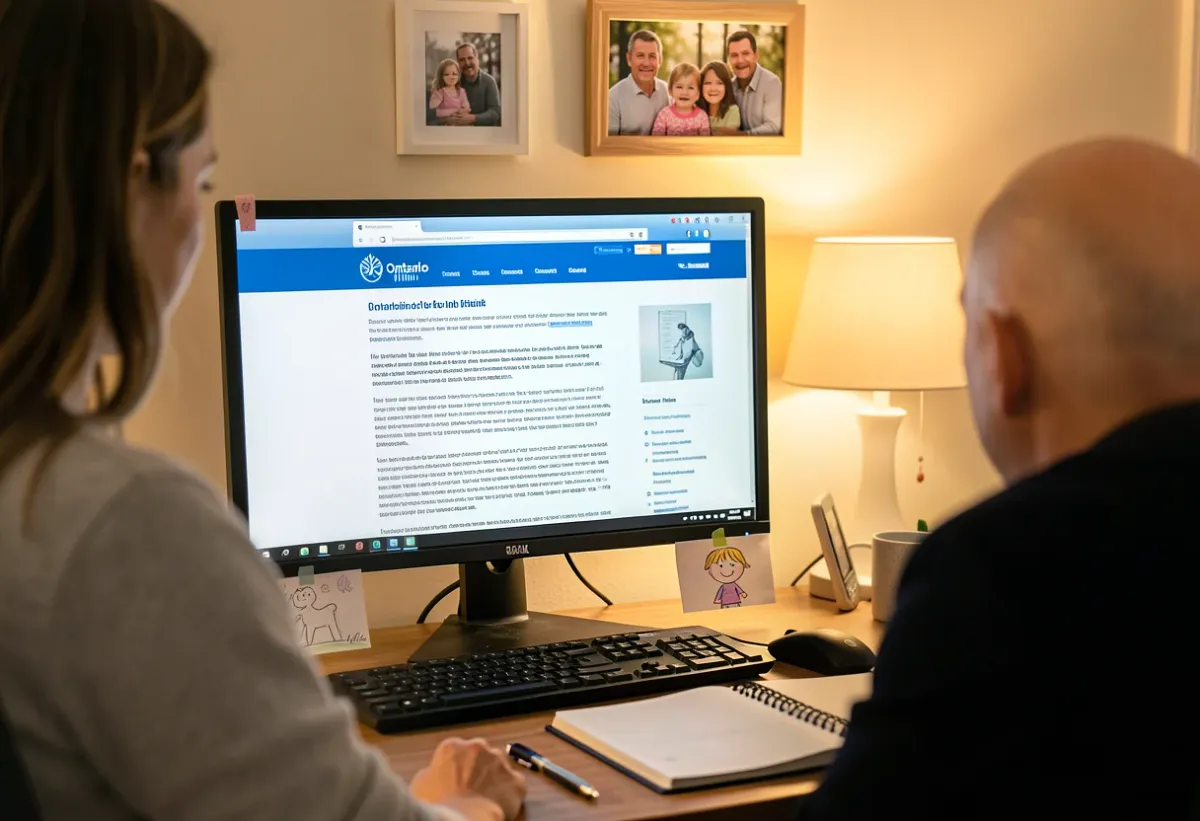
The interview typically takes 2.5 to 4 hours, and you can split it across multiple appointments — but the whole thing should be finished within one month (ideally two weeks), or it may need to be restarted. Access is built in: interviews happen by phone or video, you can ask to split it into two shorter sessions, and free translation is available in 60 languages. Your child can be present but does not have to be, and you can invite anyone who can speak to your child's skills and needs.
To book, you will first do a welcome call through the family portal, where you share your language preference, any accommodation needs, and timing. Your care coordinator helps schedule the interview at the end of that call. If you need to cancel or rebook, contact your assigned care coordinator directly.
3. How to Prepare: Document Your Child's Needs
The strongest predictor of a fair allocation is specific, recent, everyday detail — because the DoN is a picture of your child over the last 30 days, not a best-case snapshot. Before the interview, jot down real examples for each of the 10 domains AccessOAP reviews: communication, social interaction, play and leisure, activities of daily living, motor skills, cognitive skills, sensory system, interfering behaviours, mental health, and adaptability and resilience.
"Struggles with noise" is an impression. "Covers ears and walks out of the grocery store when the store music kicks in, three or four times a week" is data your care coordinator can act on. Bring daily examples, and any written reports you already have — teacher notes, an IEP, a speech or therapy summary. You can upload documents through the family portal ahead of time, and you can invite another adult (grandparent, partner, sibling's teacher) to add what you cannot. When your needs span more than one discipline, our guide to ABA vs. Speech Therapy vs. Occupational Therapy can help you describe which services are doing the real work today.
4. What Happens After the Interview
At the end, your care coordinator helps you schedule a follow-up call to review your funding agreement and the services you want to access. You then receive a summary with your annual allocation and a link to sign. Your funding level is set by your child's age band and the intensity of support needs — limited, moderate, or extensive — and amounts vary by age band and year, so check the current ontario.ca page for the latest figures.
You will choose how you receive the funds (advance payments or reconciliation) and provide banking information. Depending on your allocation size, you receive a single payment or installments, and you account for spending with expense forms and any required documentation, such as a letter of recommendation for technology or equipment. Your funding covers eligible clinical services like ABA, speech-language pathology, occupational therapy, and mental health — and you choose your providers. Our guides on How to Choose the Right Therapy Provider in the Western GTA and Beyond OAP: A Financial Relief Guide for Ontario Special Needs Families are good next steps once you know your number.
5. How Xable Supports Families Through the DoN Process in the Western GTA
At Xable we are registered with the OAP and serve families across Oakville, Mississauga, Brampton, Milton, Burlington, and Etobicoke. Before your interview, I will walk you through the ten domains and help you pull together concrete, recent examples from home, school, and community — so the allocation reflects your child's actual week. Once you have your number, we help you turn it into a treatment plan, keep your documentation clean for expense claims, and coordinate with your school and any other clinicians so nothing falls between the cracks.
Ready to Prepare for Your DoN Interview?
If your child has an OAP invitation in the Western GTA and you want to walk into that interview with the right examples, the right documents, and the right questions, reach out. We will help you prepare — no pressure, no sales pitch.
Contact Xable
- Phone: (289) 430-5730
- Email: info@xable.ca
- Website: xable.ca

Afsheen Sheikh
Managing Director & Behaviour Consultant | M.Sc., M.B.A., B.C.B.A., R.B.A. (Ont.)
Afsheen’s journey into special needs therapy began over 20 years ago following her son's autism diagnosis. Combining personal parent perspective with extensive clinical practice, she provides evidence-based, compassionate, and neurodiversity-affirming care for families across Mississauga, Oakville, Brampton, Milton, Burlington, and Etobicoke.
Navigating the Ontario Autism Program?
Get personalized support for OAP funding allocations, ABA/IBI therapy, speech-language therapy, and life skills programs across Mississauga, Oakville, Brampton, Milton, Burlington, and Etobicoke.
Related Articles

How to Choose the Right Therapy Provider in the Western GTA: Questions Every Parent Should Ask
How to choose a therapy provider for your autistic child in Western GTA: key questions to ask, OAP checks, red flags, and what a great provider looks like.
What Every Parent Should Know About the Ontario Autism Program (OAP) in 2026
A complete step-by-step guide to OAP eligibility, AccessOAP enrollment, funding allocations, Core Clinical Services, and choosing a provider in Western GTA.

New School Jitters: A Step-by-Step Transition Plan for Autistic Children Starting School in Ontario
A step-by-step school transition plan for autistic children: summer prep, school visits, visual schedules, and partnering with teachers and EAs in Ontario.